Launch & Discovery Guides
Practical guides on launching products, getting discovered, and reaching the right audience - written for founders and developers.
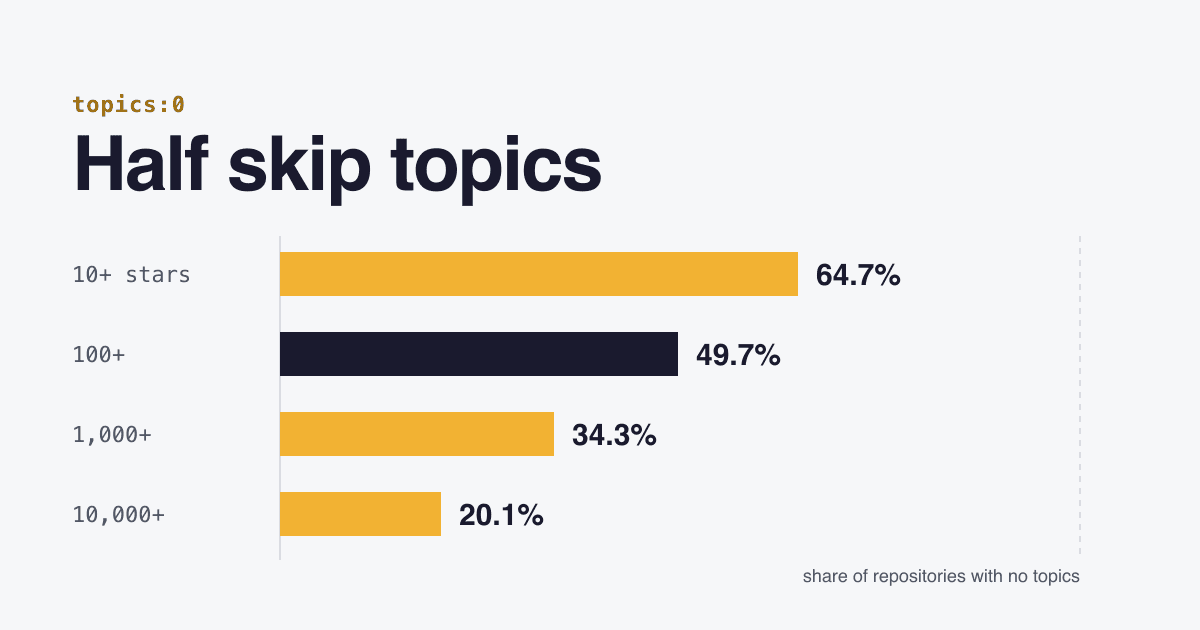
GitHub Topics and the About Box: The Three Fields Repository Search Reads
A plain GitHub repository search looks at the name, the description and the topics, and at the README only when someone adds in:readme. Yet about half of the repositories with 100 or more stars have no topics at all. What each field of the About box does, GitHub's limits for topics and the social preview image, and the commands that set them.
CodeTrendy Editorial Team
More Articles
20 total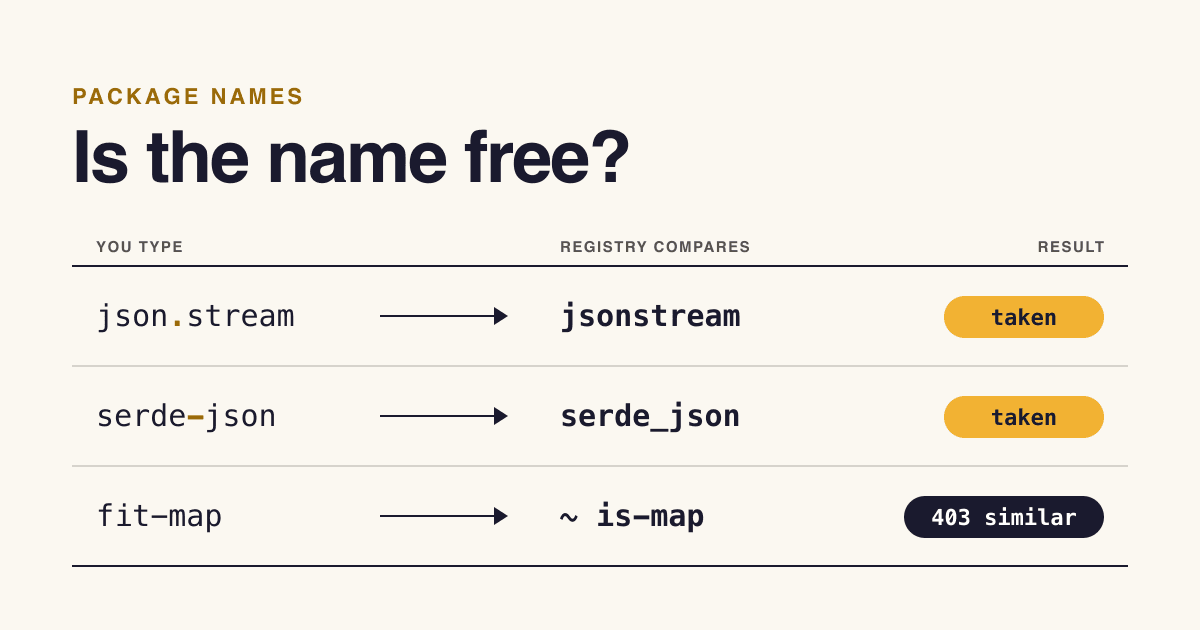
Is That Package Name Really Free? How Registries Decide Who Gets a Name
A 404 from the registry only says no package has that exact name. npm, PyPI and crates.io also compare a normalized form and block reserved names, npm and PyPI refuse names that look too similar, and a taken name changes hands only in narrow cases. The rules side by side, the lookup commands, and the order to check a name in.
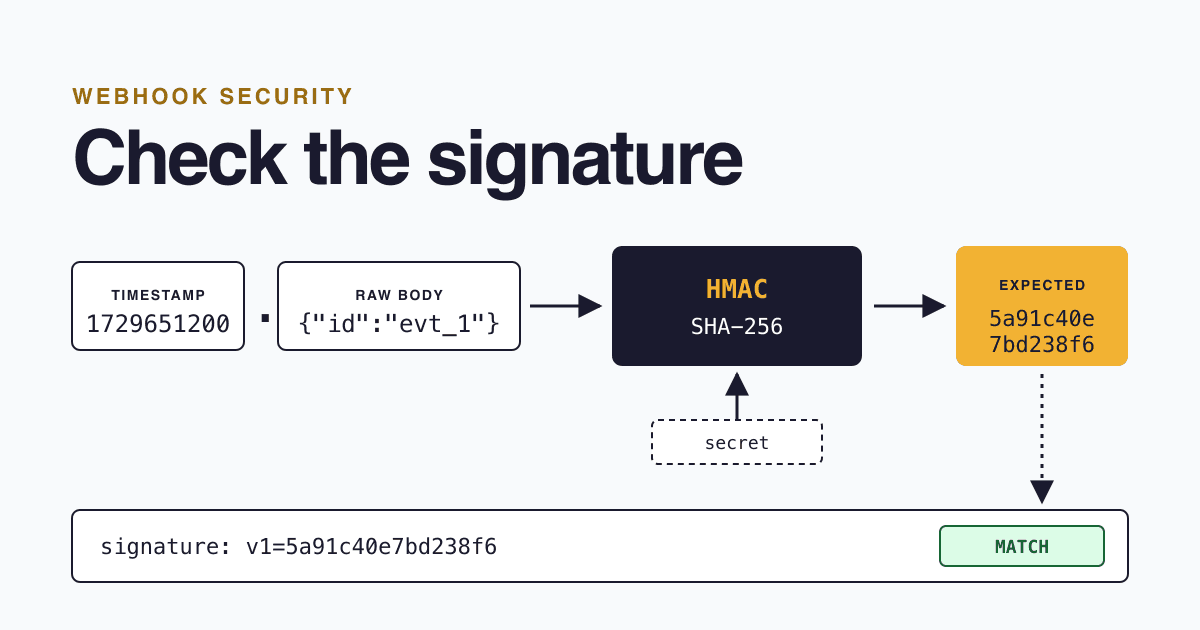
Webhook Signature Verification: How Stripe, GitHub, Slack and Shopify Sign Events, and How to Check One
A webhook URL is public, so the signature header is the dependable proof that a request came from the provider. What each major provider signs, a Node.js verifier with a constant-time compare, the time limits that matter, and how to rotate a secret without losing events.
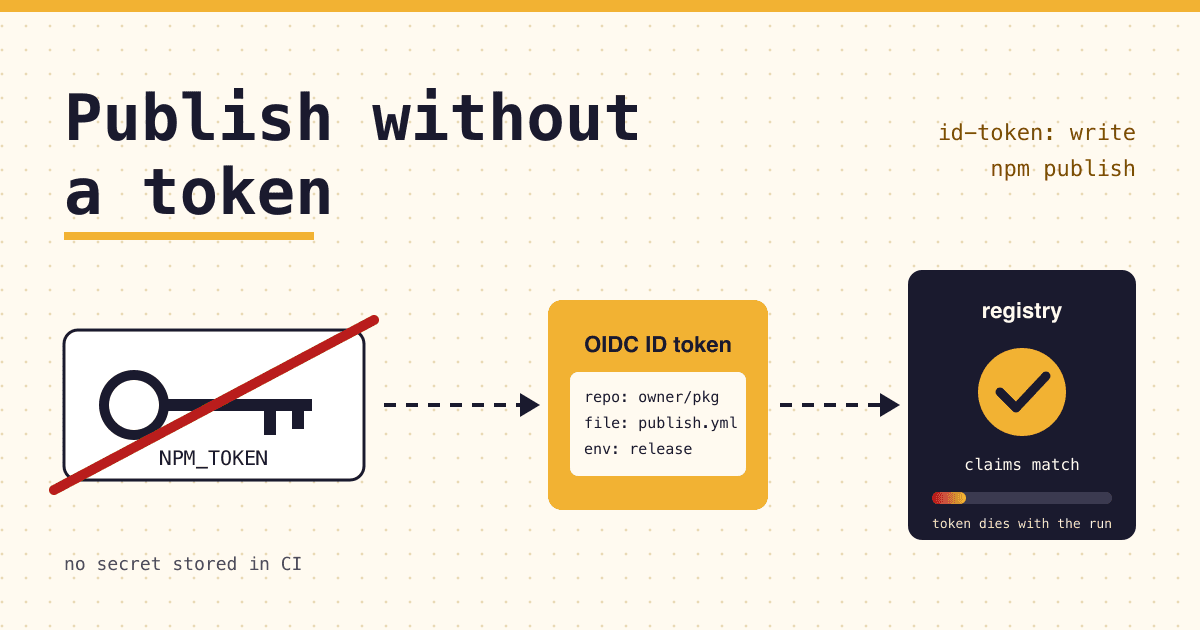
npm Trusted Publishing: Ship Releases From CI Without an NPM_TOKEN Before January 2027
npm targets January 2027 to stop access tokens from publishing new versions directly. Trusted publishing replaces the NPM_TOKEN secret with a short-lived OIDC identity from GitHub Actions, GitLab or CircleCI. How it works, how to set it up, and what to do when CI cannot use it.
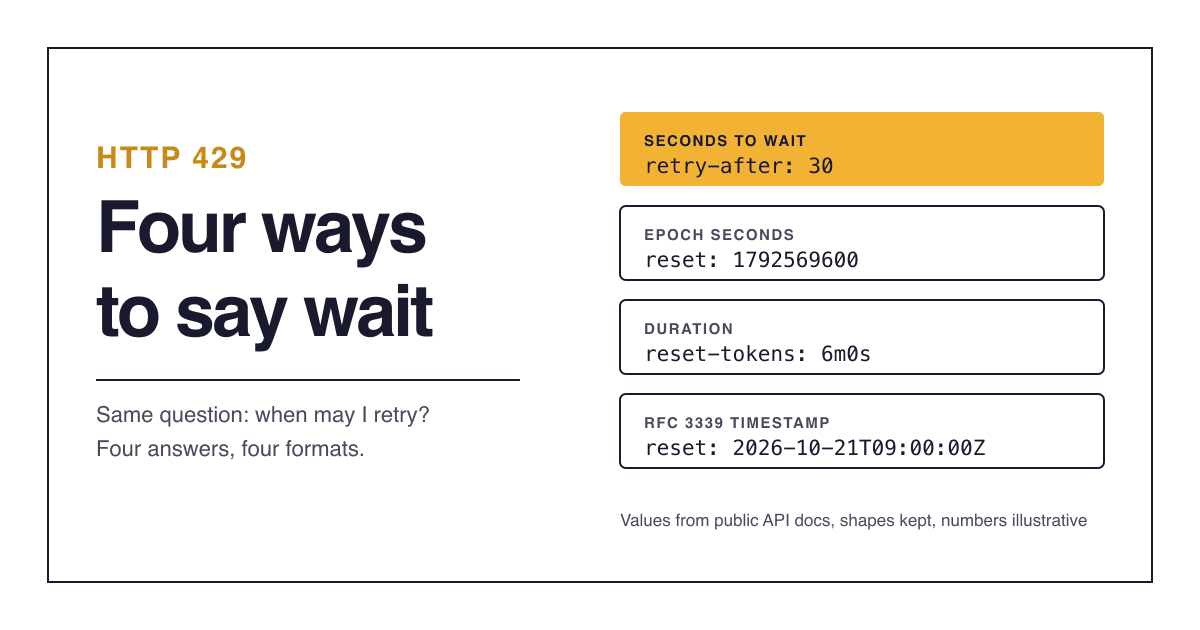
API Rate Limit Headers: What to Send With a 429, and How Clients Should Wait
A 429 Too Many Requests tells a client to slow down; Retry-After and the rate limit headers tell it for how long. What each header means, how GitHub, OpenAI, Anthropic and Discord write them, and a retry loop that honours Retry-After and backs off with jitter.
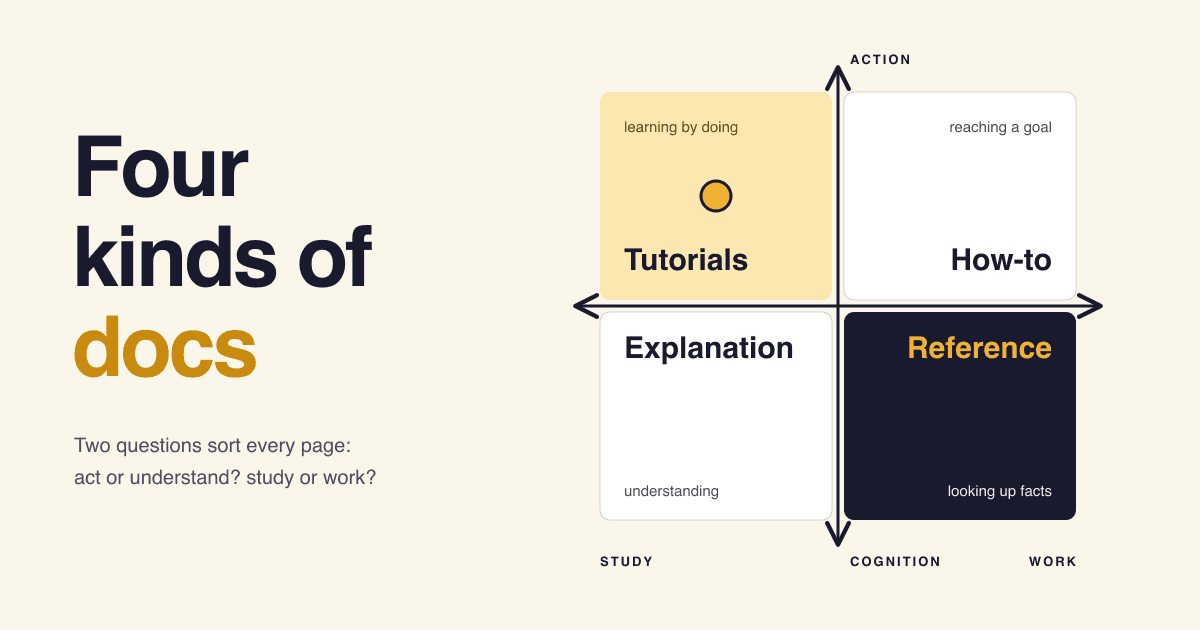
Diátaxis: How to Structure Developer Documentation in Four Kinds of Pages
The Diátaxis framework sorts every docs page with two questions about the reader: doing or understanding, learning or working. What goes in tutorials, how-to guides, reference and explanation, and how to fix the docs you already have.
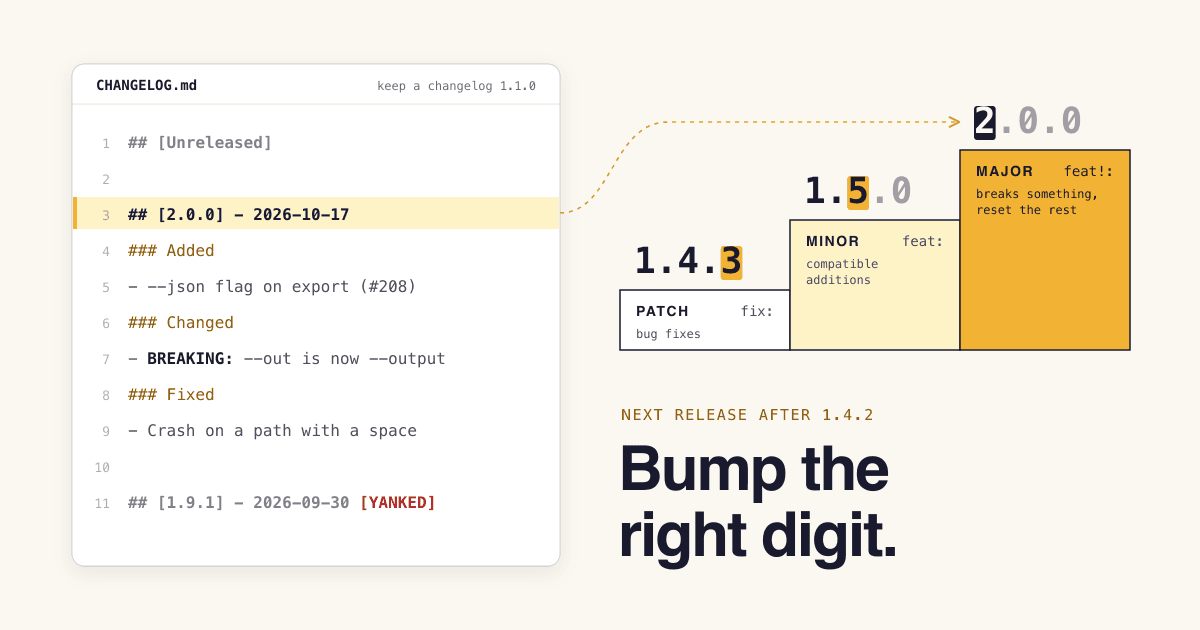
Changelogs People Read: Keep a Changelog, SemVer and Release Notes in Practice
What goes in a CHANGELOG.md, how to pick the next MAJOR.MINOR.PATCH number, why npm treats 0.x versions differently, and which tools can draft release notes for you.
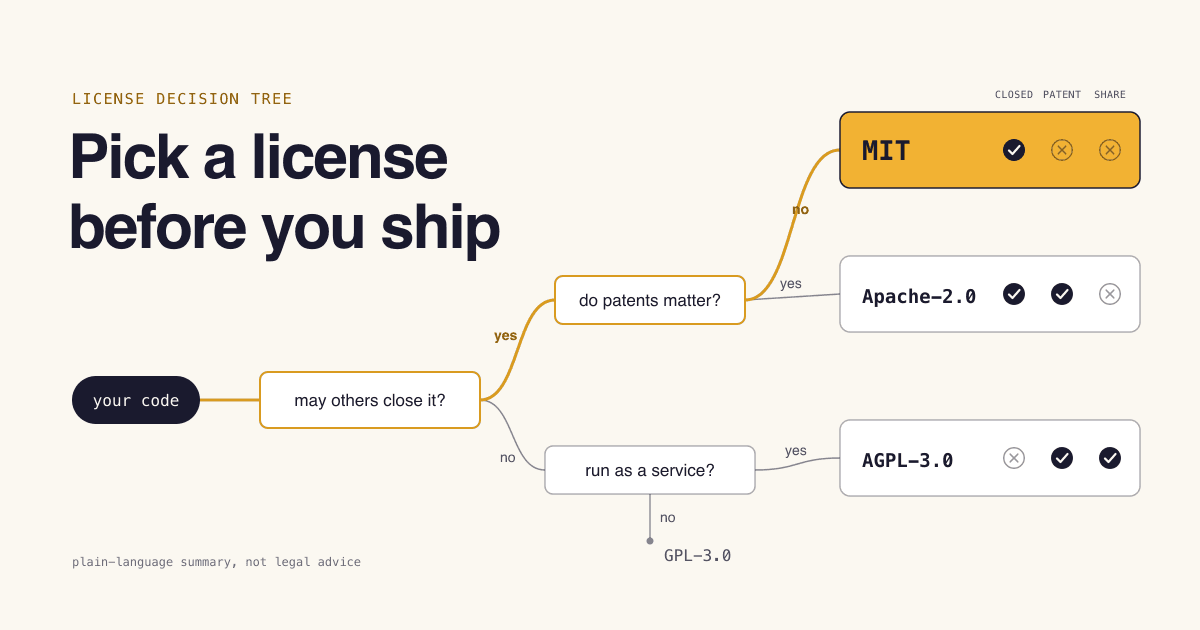
MIT, Apache 2.0 or AGPL? Picking an Open Source License Before You Ship
What MIT, Apache 2.0, MPL, GPL, AGPL and source-available licenses ask of the people who use your code, which one each package ecosystem defaults to, and why Elastic, HashiCorp and Redis changed theirs.
llms.txt for Developer Tools: What It Does, Who Reads It, How to Write One
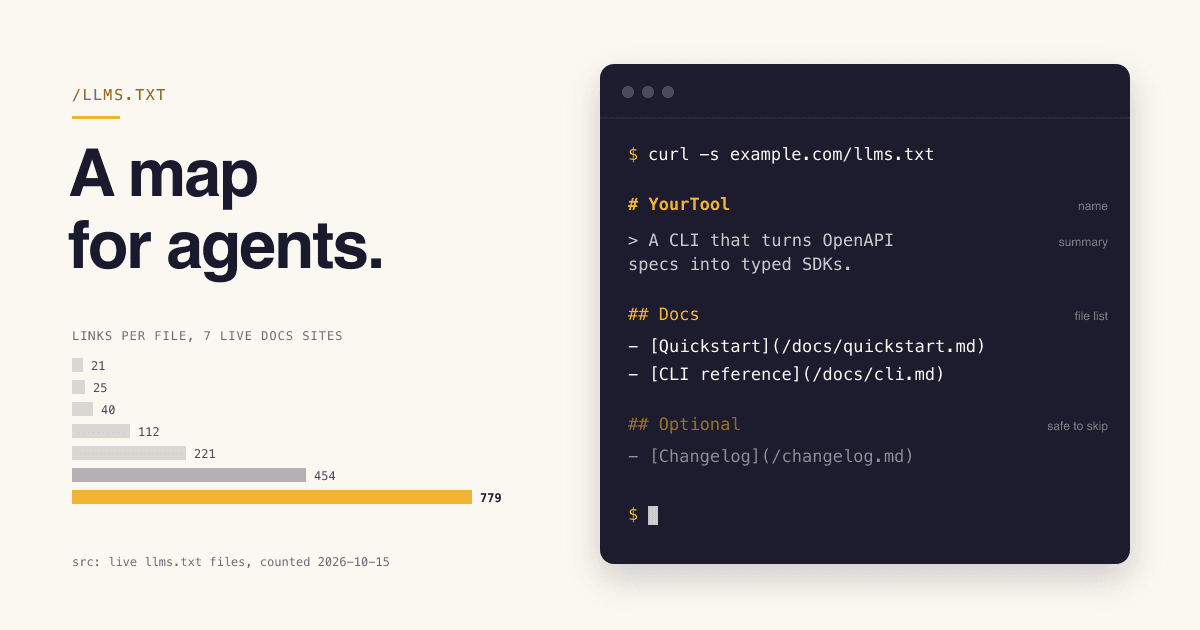
An llms.txt file gives AI agents a short map of your docs. What goes in it, which tools actually read it, what it will not do for search, and how to write one for your developer tool.
Are GitHub Stars Worth Chasing? What the Research Says
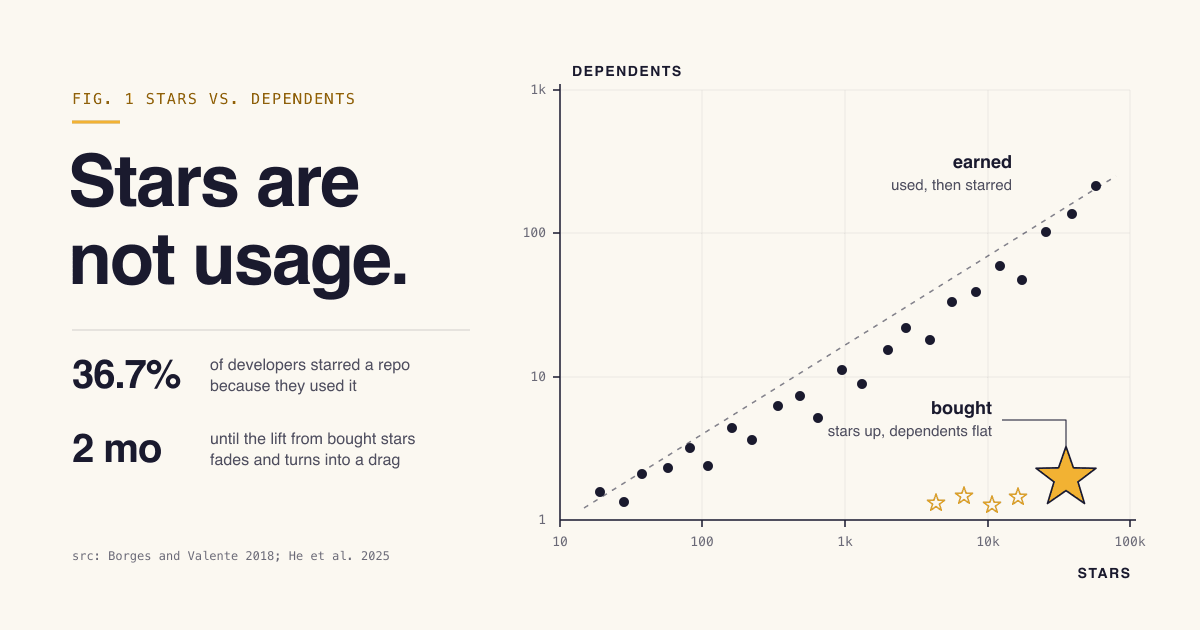
Most developers check the star count before they adopt a tool, but most stars are not usage. What a star measures, what bought stars do to a repository, and which signals show real adoption.
How to get cited by AI search: what the evidence says
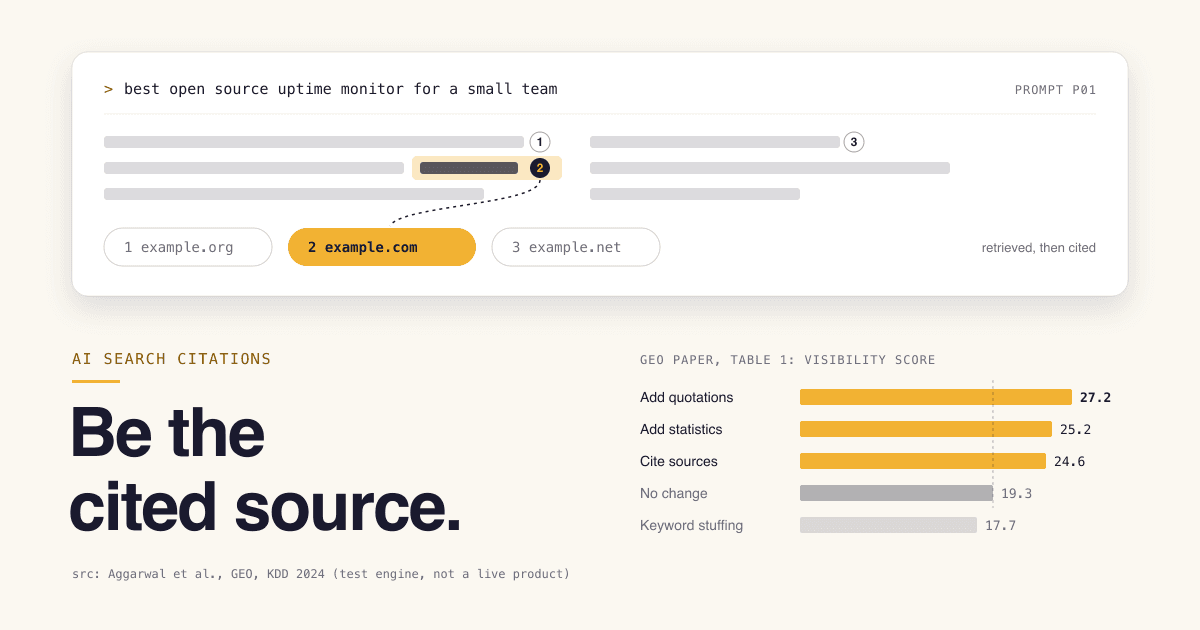
An evidence-first guide for founders of small product sites: what the vendors document, what one much-quoted research paper really tested, which tactics are unproven, and a weekly method for checking whether AI answers cite you.
AI crawlers, robots.txt and llms.txt: a startup guide
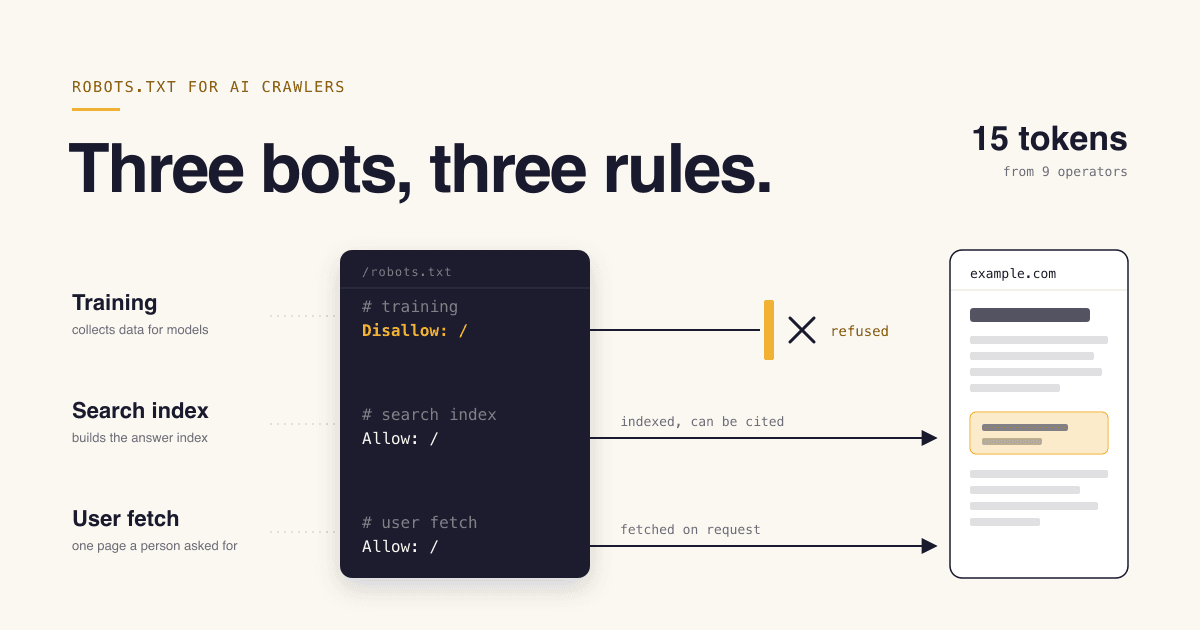
A technical reference for founders who run their own site: every major AI crawler sorted by what it does with your pages, with the vendor documentation behind each row.
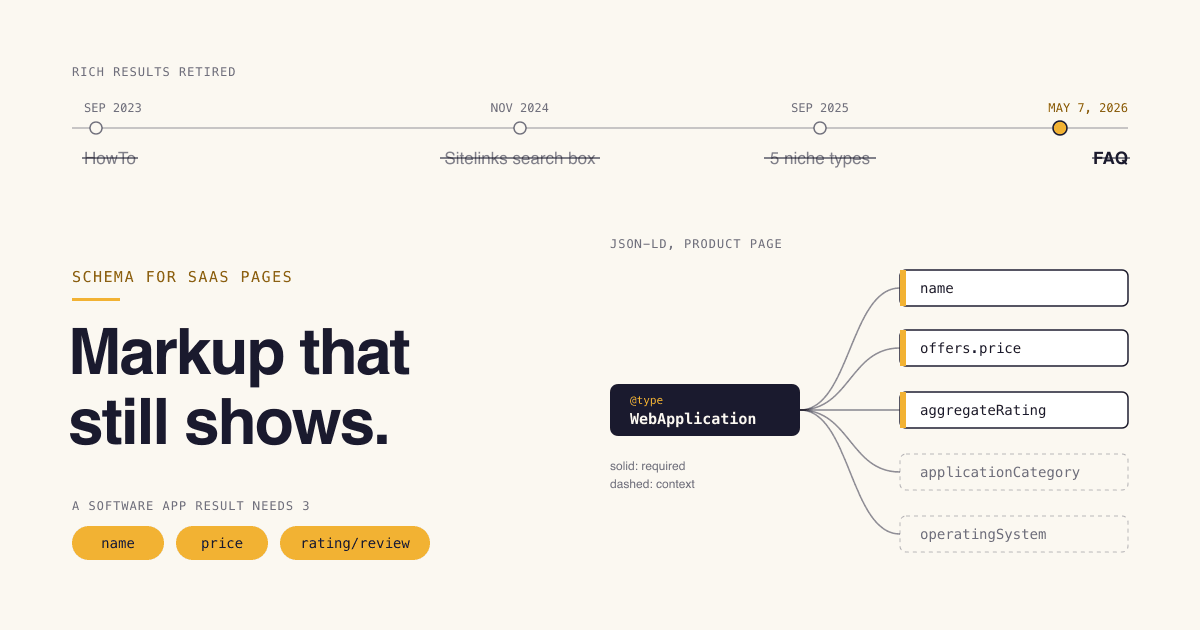
Schema markup for SaaS pages: what Google still shows
A type-by-type reference for founders and developers adding JSON-LD to a software product site, checked against Google Search Central documentation in October 2026.
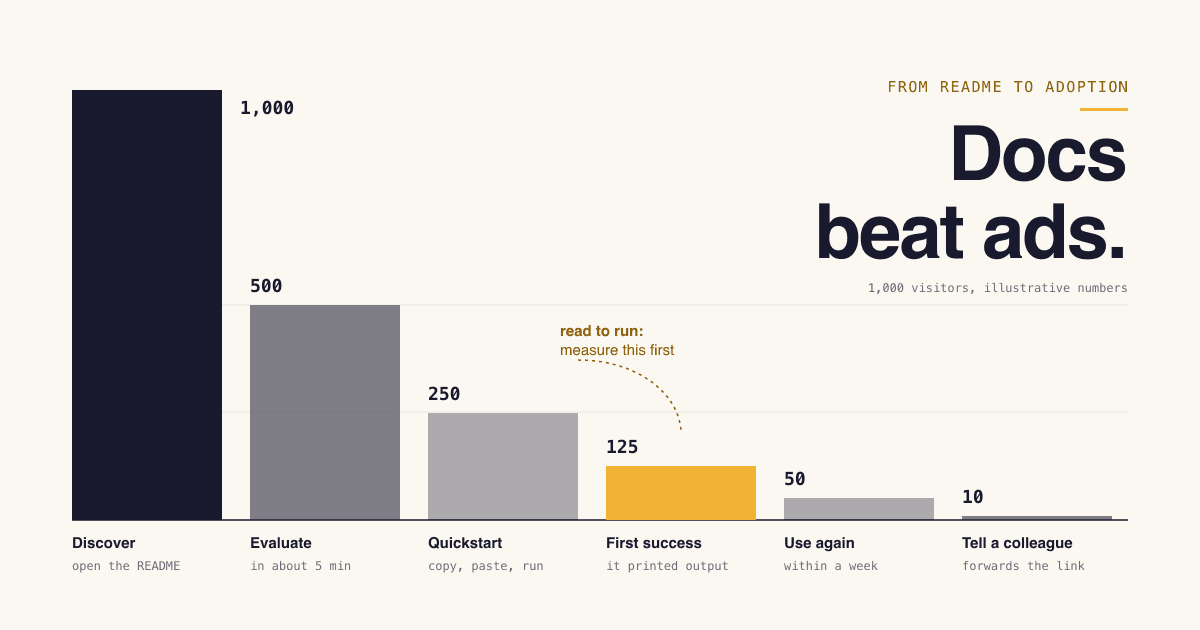
How developers discover and adopt new tools
A field guide for anyone marketing a developer tool to people who distrust marketing. It follows one path: discover, evaluate in 5 minutes, first success, tell a colleague.
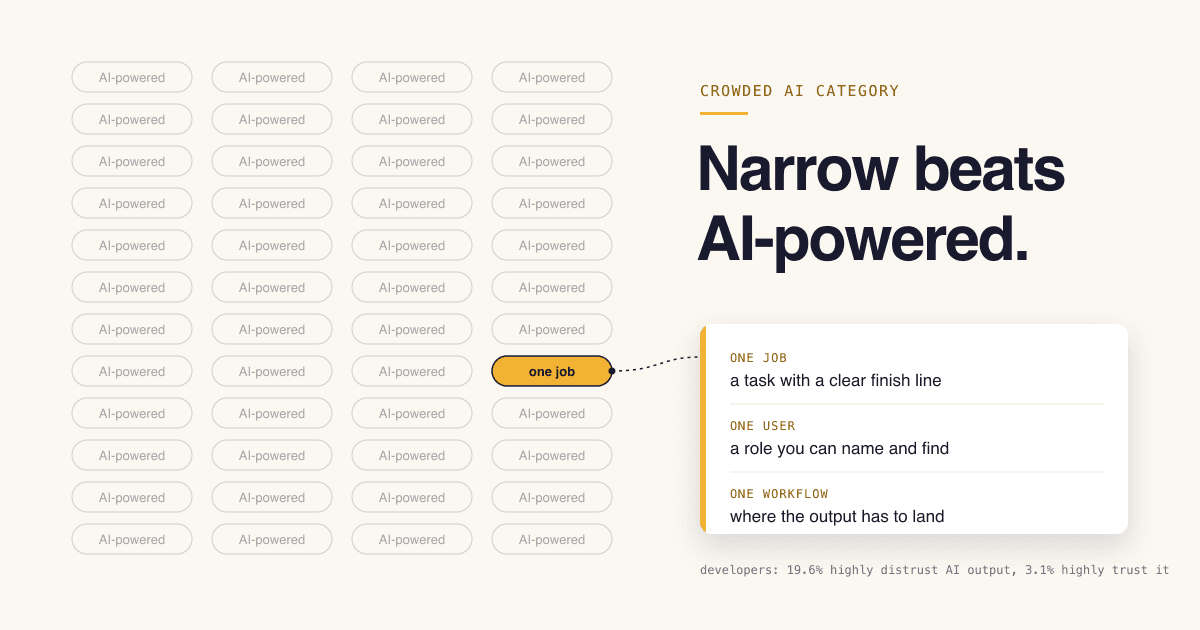
How to launch an AI tool in a crowded category
A working method for founders shipping "another" AI writing, notes or chatbot tool. You leave with a rewritten one-line claim and a plan for the evidence behind it.
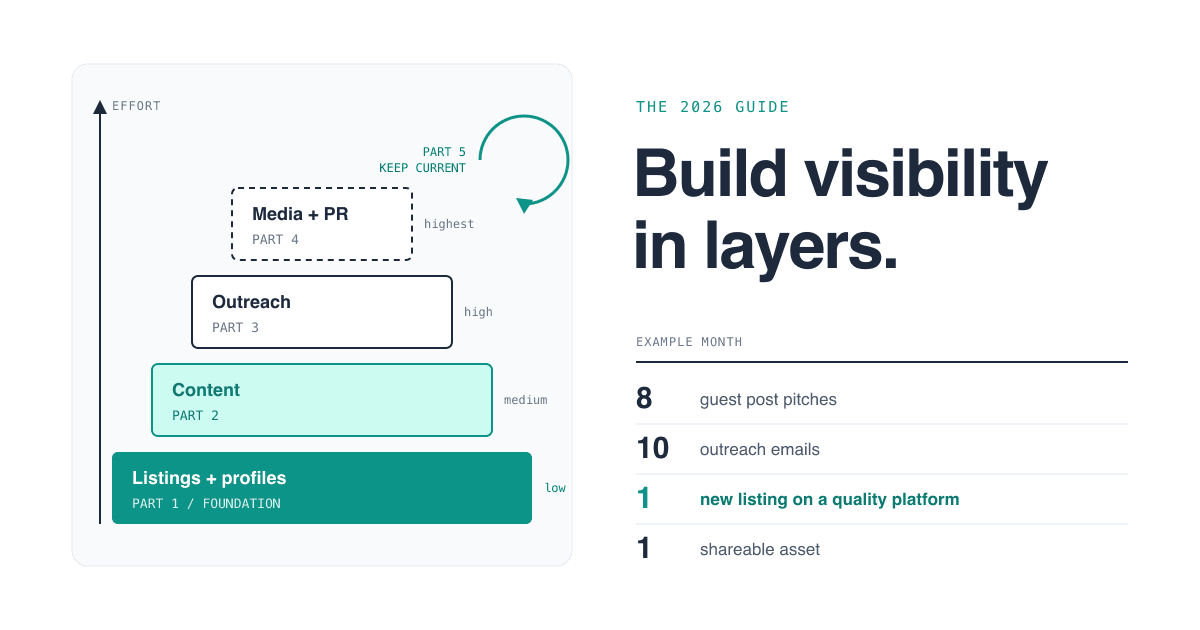
The Complete Guide to Product Visibility in 2026
Everything you need to know about building product visibility in 2026 - from strategy to outreach to tracking results. This guide covers every major channel for getting your product discovered, with actionable steps.
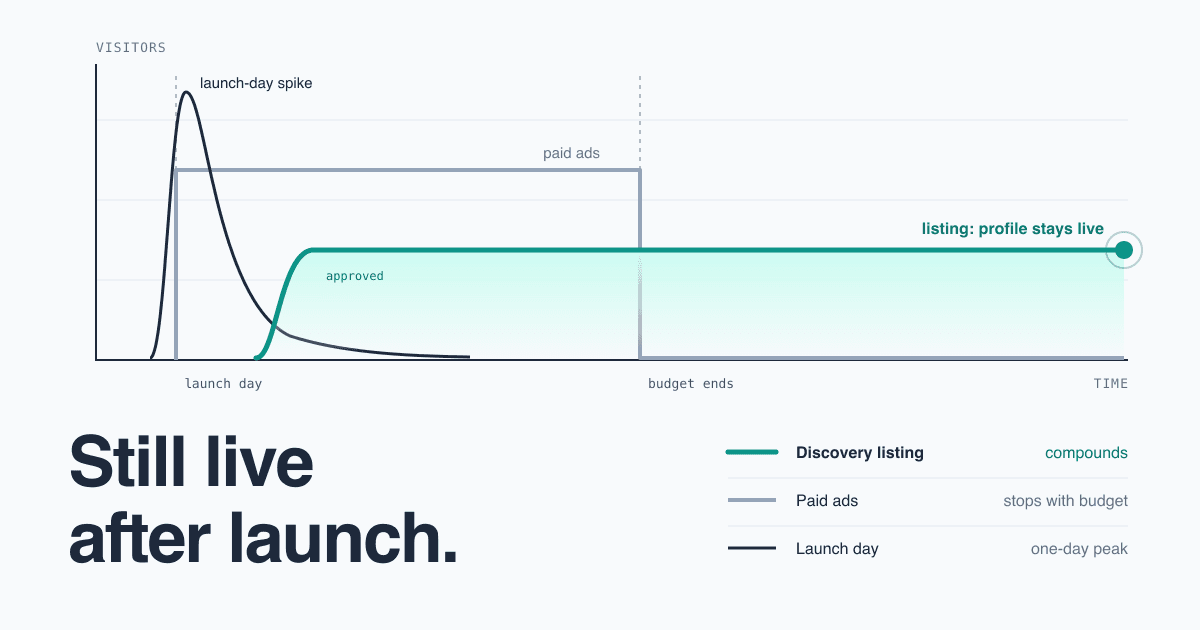
Why Every Startup Needs a Product Discovery Listing
A product discovery listing is one way for startups to get in front of early adopters, build credibility, and give your product a public profile people can find from the moment you launch.
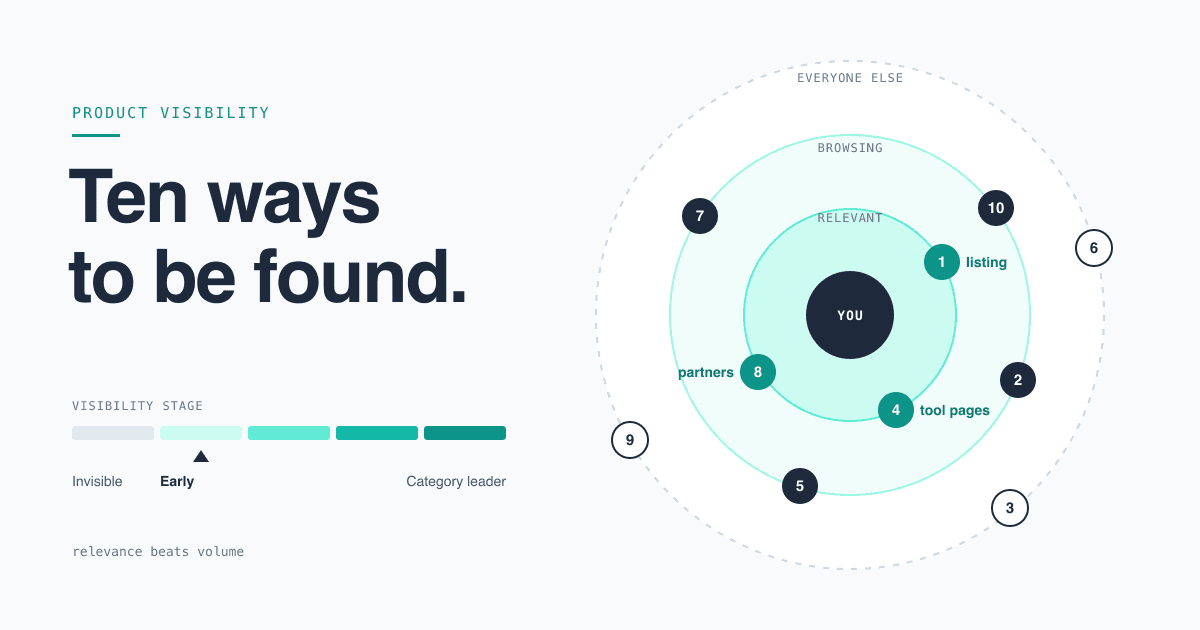
Top 10 Ways to Increase Your Product Visibility
Product visibility is how easily the right people can discover what you built. Here are 10 practical ways to get your product in front of a relevant audience and increase qualified discovery.
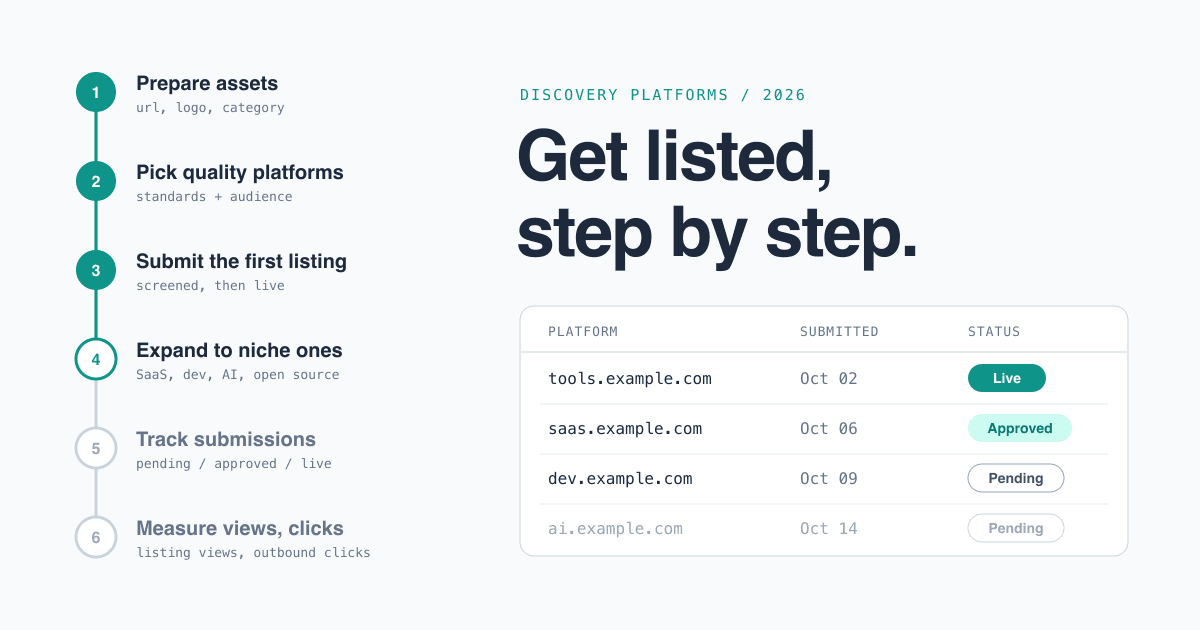
How to Get Your Product Listed on Discovery Platforms in 2026
A practical, step-by-step guide to getting your product listed on curated discovery platforms in 2026 - what to prepare, which platforms to target, and how to maximize your chances of approval.
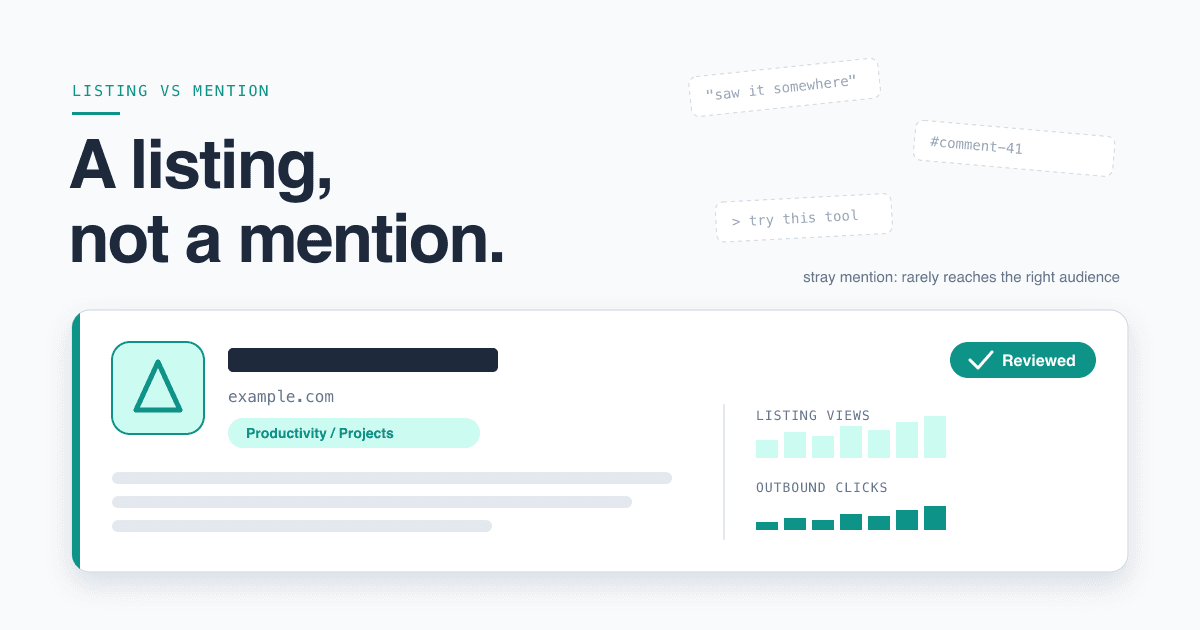
What a Curated Product Listing Is and Why It Matters
Learn what a curated product listing actually is, how a discovery platform puts your tool in front of the right audience, and why a credible public profile is one of the most useful early moves you can make.