Key Takeaways
- Getting discovered remains one of the hardest and most important parts of growing a product in 2026.
- A systematic, multi-channel approach works better than relying on a single method.
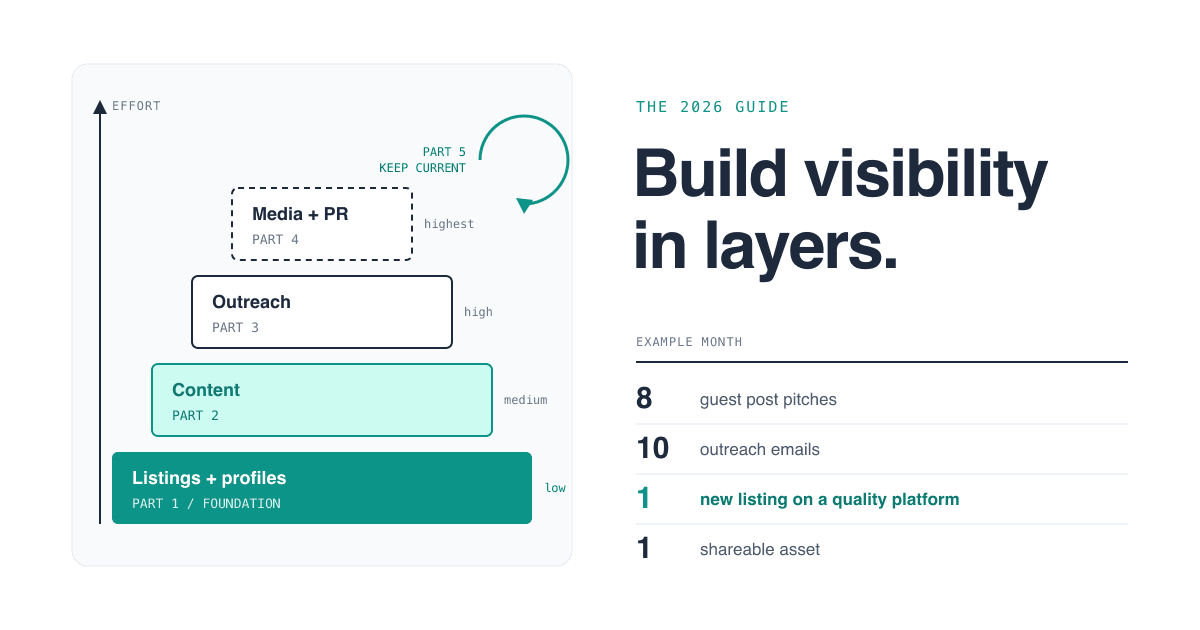
- Foundation placements (listings, profiles) should come first; then layer in content and outreach.
- Relevance always beats volume - one placement in front of the right audience beats many in front of the wrong one.
- Track progress monthly: listing views, outbound clicks, referral visits, and qualified signups.
- Avoid spammy mass submissions and fake-engagement schemes - they waste effort and damage trust.
Why Discovery Still Drives Growth
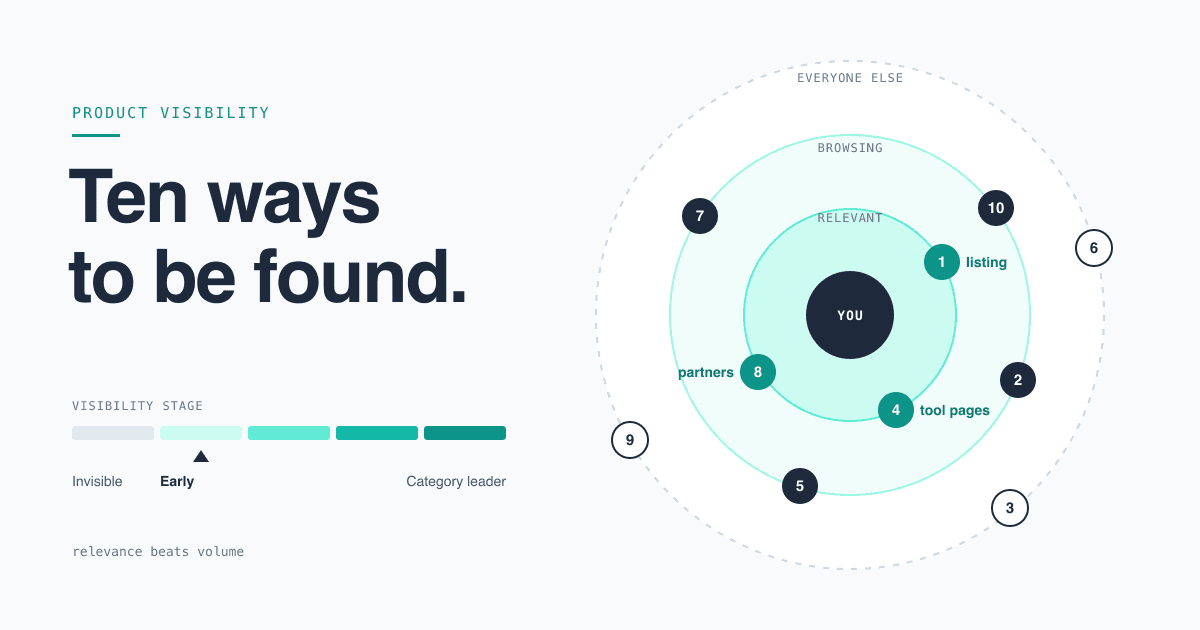
Despite an ever-growing flood of new tools, the products that win are the ones the right people can actually find. The reason is simple: even the best product cannot be adopted if its audience never encounters it. That is why a deliberate visibility strategy is worth the effort.
This guide covers every major channel for getting your product discovered in 2026, organized by effort level.
Part 1: Foundation Placements (Low Effort)
Curated Discovery Listings
Curated discovery platforms put your product in front of a relevant audience with minimal ongoing effort. List once, and the profile stays live. Focus on platforms with clear content standards, a relevant audience, and topics that match your niche. Submit your product to CodeTrendy to set up your first foundation placement.
Business Profile Listings
Crunchbase, a LinkedIn Company Page, and industry-specific databases all give your product a presence and make it easier for people to verify you exist. Google Business Profile is different: Google's eligibility guidelines require in-person contact with customers and exclude online-only businesses, so most software products should skip it.
Social Profiles
Twitter/X, GitHub, LinkedIn, and niche community profiles (IndieHackers, DEV.to) give your product more public touchpoints where people can find and follow you. They add places where your audience can find you.
| Channel | Effort | Audience Reach |
|---|---|---|
| Discovery listings | Low | Relevant, ready-to-try |
| Business profiles | Low | Broad, verification-focused |
| Guest posting | Medium-High | Engaged niche readers |
| Original research | High | Press and influencers |
| Media outreach | Very High | Large, mainstream |
| Community engagement | Medium | Active, high-intent |
Part 2: Content-Based Visibility (Medium Effort)
Guest Posting
Writing articles for established publications is one way to reach a new audience. The process:
- Identify 20 target publications in your niche
- Study their content style and pitch guidelines
- Craft a unique headline with a clear angle or original data
- Send a short pitch email (3-4 sentences maximum)
- Deliver exceptional content when accepted
Acceptance varies by publication and many cold pitches go unanswered, so build a relationship with the editor first where you can.
Original Research and Data Studies
Content built on original data gives other writers something to cite. If you can survey your users, analyze anonymized product data, or compile public statistics in a novel way, the resulting report can become a reference others point to. State the sample size, the date, and the method, or readers have no reason to trust it.
Ultimate Guides and Comprehensive Resources
Long-form, comprehensive guides get shared passively because they become the go-to reference on their topic. The bar is high: your guide needs to be genuinely the best resource available. Invest the effort, promote it at launch, and update it annually.
Pro Tip
The best shareable assets solve a problem people keep running into but cannot find a good answer to. Use research tools to find common questions with weak existing answers. Then create the definitive resource.
Pro Tip
Before pitching a guest post, engage with the publication's existing content first. Comment on recent articles, share their posts, or reply to their newsletter. Your pitch then arrives from a recognizable name rather than a stranger.
Part 3: Outreach-Based Visibility (High Effort)
Replacing Outdated Recommendations
Find resource pages and articles in your niche that recommend tools which are now defunct or outdated. Reach out and suggest your product as a current, better alternative. Tools: search operators and a simple link checker.
The Best-In-Class Approach
Find the most-referenced content or tool list in your niche. Create or pitch a significantly better version. Reach out to everyone pointing to the original and show them your upgraded resource. This is high effort but reaches a highly relevant audience already interested in the topic.
Turning Mentions into Engaged Visitors
Set up Google Alerts for your product name. When someone mentions you, reach out, thank them, and point their readers to where they can learn more. It is worth doing because the person is already interested in your space.
Resource Page Placements
Find resource pages that curate tools and articles for their audience. Search: intitle:resources + your-keyword or inurl:tools + your-topic. Contact the page owner with a personalized suggestion. The key is relevance - only pitch where your product genuinely fits.
Part 4: Media and PR (Highest Effort)
Journalist Outreach
Sign up for HARO (Help a Reporter Out) and respond to relevant journalist queries. HARO is free and works by email; its owner, Featured, also runs Connectively, a platform where you browse requests and pitch inside the product. Each successful placement puts your product in front of that outlet's audience. The keys are speed (queries carry deadlines) and substance (give specific, quotable answers, not marketing speak).
Original PR Campaigns
Commission original research, take a contrarian position on a trending topic, or launch a campaign tied to a cultural moment. Pitch to journalists and newsletter writers. A well-placed story reaches a far larger audience than you can reach on your own.
Part 5: Ongoing Maintenance
Keep Your Listings Current
Review your existing listings periodically. Make sure descriptions, screenshots, links, and pricing are up to date. An outdated profile sends people the wrong message and wastes the visibility you already have. This is fast, free, and often overlooked.
Optimize Your Own Site
Your website is the destination for every placement. Make sure your highest-traffic pages clearly explain your value and guide visitors toward the next step. Audit this quarterly so the people you reach actually convert into users.
Building a Monthly Visibility System
We recommend treating visibility as a systematic, ongoing activity rather than a one-time campaign. An example monthly plan (adjust the numbers to your capacity):
- 2 guest post pitches sent per week (8/month)
- 10 outreach emails to resource pages and relevant publications
- 1 new listing on a quality discovery platform
- 1 piece of shareable content (research, guide, or tool)
- Weekly mention monitoring with friendly follow-up
Track everything in a spreadsheet or CRM. Review results quarterly and double down on what works.
What to Avoid in 2026
- Spammy mass submissions - listing everywhere indiscriminately wastes effort and reaches no one relevant
- Fake engagement schemes - bought votes and bot traffic damage credibility and trust
- Low-quality platforms that publish anything and have no real audience
- Overpromising in your copy - claims your product cannot back up erode trust fast
- Ignoring relevance - reaching the wrong audience at scale is worse than reaching the right one in small numbers
Measuring Progress
Track these metrics monthly: listing views, outbound clicks, referral visits (from your analytics), and qualified signups. Give consistent effort several months before you judge it, and compare against your own baseline rather than someone else's timeline. Start your foundation today - submit your product to CodeTrendy and check pricing options for paid plans.
Frequently Asked Questions
How many placements do I need to get noticed?
It depends entirely on your niche and how competitive it is. A smaller, focused space might need just a few well-targeted placements, while a crowded category benefits from showing up in more relevant places. Focus on where your audience actually browses rather than chasing a number.
Are all placements equally valuable?
No. A single placement on a relevant platform full of your target users is worth more than dozens on sites your audience never visits. The factors that matter most are: the relevance of the audience, how prominently you appear, and how clearly your profile communicates value.
How fast should I build visibility?
There is no strict limit. In our view steady effort beats a burst of activity followed by months of silence, so aim for a rhythm you can sustain.
What should I do about outdated listings?
Keep them current. Review your profiles periodically and update descriptions, screenshots, and links. An accurate, well-maintained listing keeps working in your favor, while a stale one sends visitors the wrong impression.
What makes a product profile convert?
Clarity and relevance. Lead with the problem you solve, show it clearly, and make the next step obvious. A profile that speaks directly to its audience's needs gives visitors a reason to act, which a feature list does not.
Ready to list your website?
Submit to CodeTrendy and get a free public listing with a link to your site - or upgrade to a paid plan for featured placement and priority visibility in front of relevant visitors.
Submit Your WebsiteWritten by
CodeTrendy Editorial Team
The CodeTrendy team writes about launching, product discovery, and distribution. Advice in these articles is editorial opinion unless a source is linked next to it.