Key Takeaways
- Product visibility is how easily a relevant audience can discover and understand what you built.
- Greater visibility tends to bring more qualified visitors, though reach is never guaranteed.
- Start with the platforms your audience already browses.
- Relevance always beats volume - one placement in front of the right people beats many in front of the wrong ones.
What is Product Visibility?
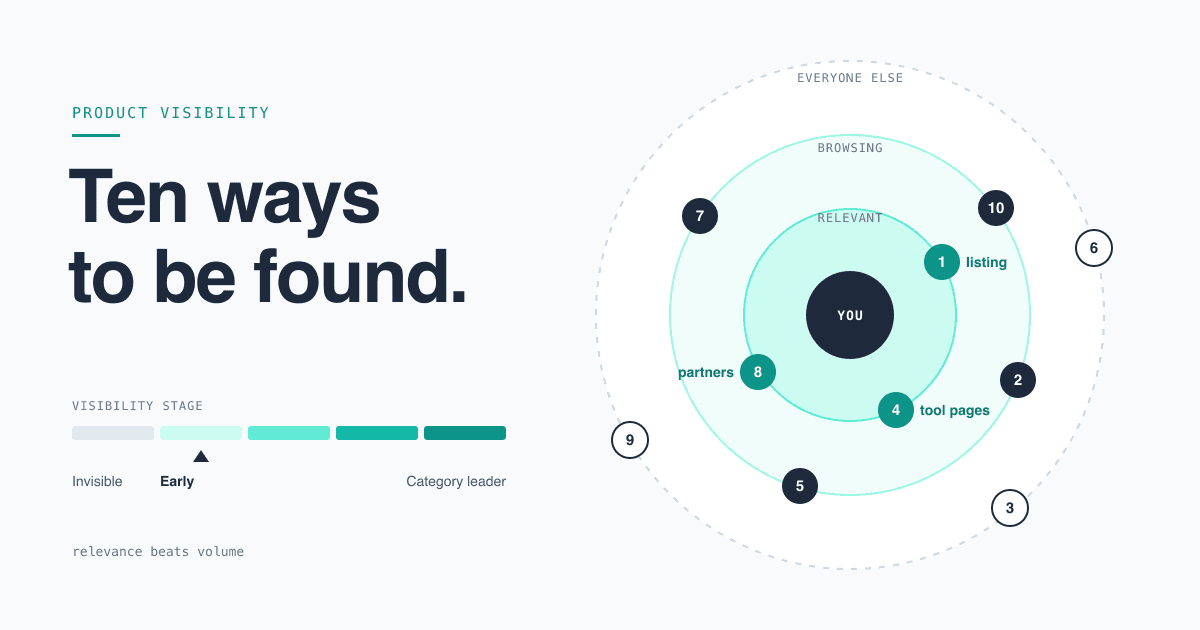
Product visibility is a simple idea: how easily can the people who would benefit from your product actually find it? It is not a single score. It is the combined result of where you appear, how clearly your value is communicated, and how relevant the audiences are that encounter you.
Unlike a vanity metric, visibility is something you can build deliberately. The more places you show up in front of a relevant audience, and the clearer your product profile is, the more qualified discovery you generate over time.
| Visibility Stage | What It Looks Like |
|---|---|
| Invisible | Brand new product, no public presence |
| Early presence | Listed in a few relevant places, first discovery |
| Established | Recognized in your category, steady discovery |
| Well-known | Frequently featured and referenced in your niche |
| Category leader | A go-to name people recommend by default |
How to Measure Product Visibility
| Signal | What It Tells You | Where to Find It |
|---|---|---|
| Listing views | How many people see your profile | Platform reporting |
| Outbound clicks | How many visit your site from a listing | Platform reporting |
| Click-through rate | How compelling your profile is | Views vs clicks |
| Referral visits | Which channels send real people | Your analytics |
| Saved products and votes | How much interest you generate | Platform reporting |
1. Get Listed on a Curated Discovery Platform
Discovery platforms like CodeTrendy put your product in front of people who are actively browsing for new tools. A single listing in the right category puts you in front of a relevant audience, which matters most for newer products. Prioritize platforms with clear content standards and a relevant audience. Submit your product to get started today.
2. Write Guest Posts on Industry Blogs
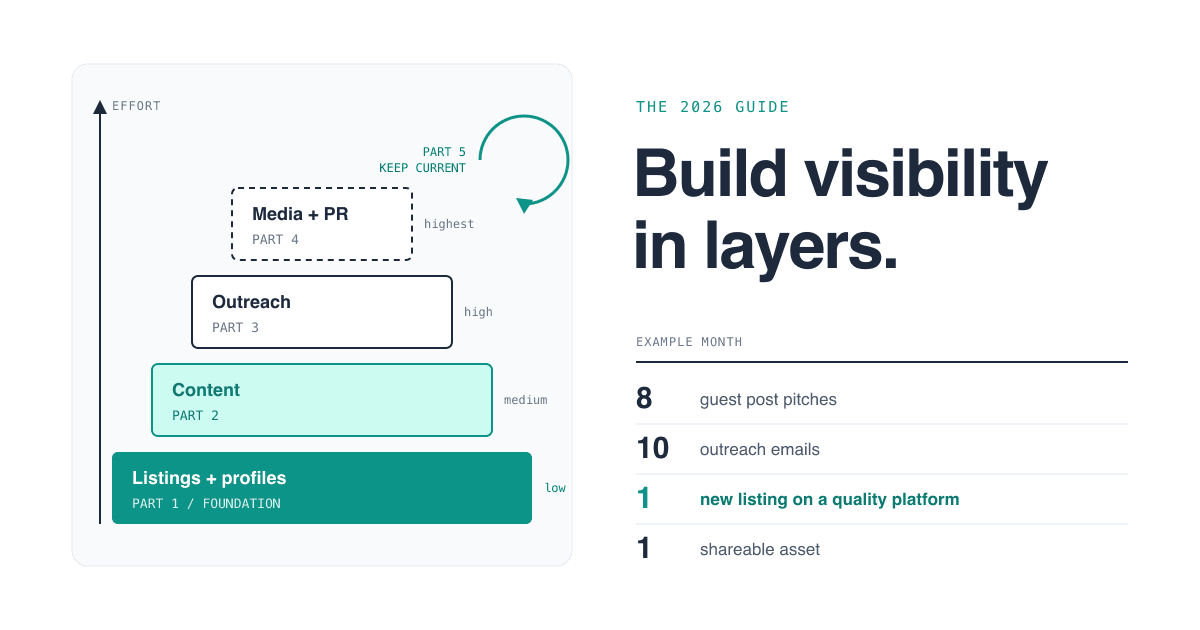
Guest posting puts your perspective in front of an audience someone else already built. Identify publications in your niche that accept guest contributors. Pitch unique, useful pieces that introduce your perspective and, where natural, your product.
3. Create Shareable Assets
Some content gets shared and referenced for months and years. The best shareable assets include:
- Original research reports with proprietary data
- Free tools and calculators that solve a specific problem
- Comprehensive guides that become the go-to reference on a topic
- Infographics and visual data that others want to embed and pass along
Invest in at least one substantial shareable asset per quarter.
4. Get Featured on Resource and Tool Pages
Search for resource pages in your niche using queries like "useful tools" + your-keyword or intitle:"resources" your-keyword. Reach out and suggest your product as an addition. Reply rates vary a lot, so pitch only where your product genuinely fits the page.
5. Turn Brand Mentions into Engaged Visitors
Use Google Alerts to find people talking about your product or your space. A polite, helpful reply is worth the time, because the person is already interested in your topic. Show up where the conversation is happening.
Pro Tip
Set up a weekly Google Alert for your product name in quotes. Every time a new mention appears, engage thoughtfully and point people to where they can learn more. It is a small habit that keeps passive mentions from going to waste.
Pro Tip
Visibility compounds, but not instantly. After a new feature or major placement, give it a few weeks before judging the impact. Discovery builds as more people encounter your product across multiple touchpoints.
6. Run a Data Study or Original Story
Journalists and newsletter writers need fresh material. If you have proprietary data (user activity, survey results, industry benchmarks), publish a study and pitch it to tech reporters and newsletters. A well-placed story reaches that outlet's whole audience at once.
7. Answer the Questions Your Audience Keeps Asking
Use search and community tools to find the questions people in your niche keep asking. Create the clearest answer available, then make sure it points back to your product where relevant. A genuinely helpful answer keeps being found after you publish it.
8. Get Listed on Partner and Integration Pages
If your product integrates with other tools, ask those tools to add you to their integrations or partner pages. These placements reach an audience already using adjacent products and require no writing - just a conversation with a business contact.
9. Answer Journalist Requests (HARO)
HARO (Help a Reporter Out) is a free service that emails requests from journalists seeking expert sources. Its owner, Featured, also runs Connectively, a platform where you browse the requests and pitch inside the product instead of by email. Both are live, so pick the one that fits how you work. Monitor requests in your industry and respond with concise, quotable answers. A successful placement gets your product mentioned in front of a news outlet's audience.
10. Publish Comparison and Alternative Pages
Pages like "Best alternatives to [Competitor]" or "[Your Tool] vs [Competitor]" are written for visitors who are actively comparing options. Keep them accurate and fair, or they cost you the trust they were meant to build.
How Long Does it Take to Increase Visibility?
There is no reliable universal timeline. It depends on your category, how relevant your placements are, and how consistently you show up, and becoming a recognized name takes far longer than a first trickle of discovery. Measure against your own baseline month to month rather than against someone else's numbers. Focus on relevance over volume. See our pricing to start building your product visibility with a CodeTrendy listing.
Frequently Asked Questions
Is product visibility the same as traffic?
No. Traffic is the result; visibility is the cause. Visibility is about appearing in front of the right people in the right places. When that happens consistently, qualified traffic tends to follow, but the two are not the same thing.
Can my visibility decrease?
Yes. Visibility fades if you stop showing up, if a placement is removed, or if competitors become more active in the places your audience browses. Steady, ongoing effort keeps your product in front of people.
Does my own website affect visibility?
Indirectly, yes. A clear, fast, well-described product page makes every placement more effective, because visitors who arrive immediately understand what you offer and are more likely to engage.
How often should I review my visibility?
Monthly is sufficient. Look at listing views, outbound clicks, and referral visits to see which channels are working. Checking more frequently leads to overreacting to normal day-to-day fluctuations.
Ready to list your website?
Submit to CodeTrendy and get a free public listing with a link to your site - or upgrade to a paid plan for featured placement and priority visibility in front of relevant visitors.
Submit Your WebsiteWritten by
CodeTrendy Editorial Team
The CodeTrendy team writes about launching, product discovery, and distribution. Advice in these articles is editorial opinion unless a source is linked next to it.