Launch & Discovery Guides
Practical guides on launching products, getting discovered, and reaching the right audience - written for founders and developers.
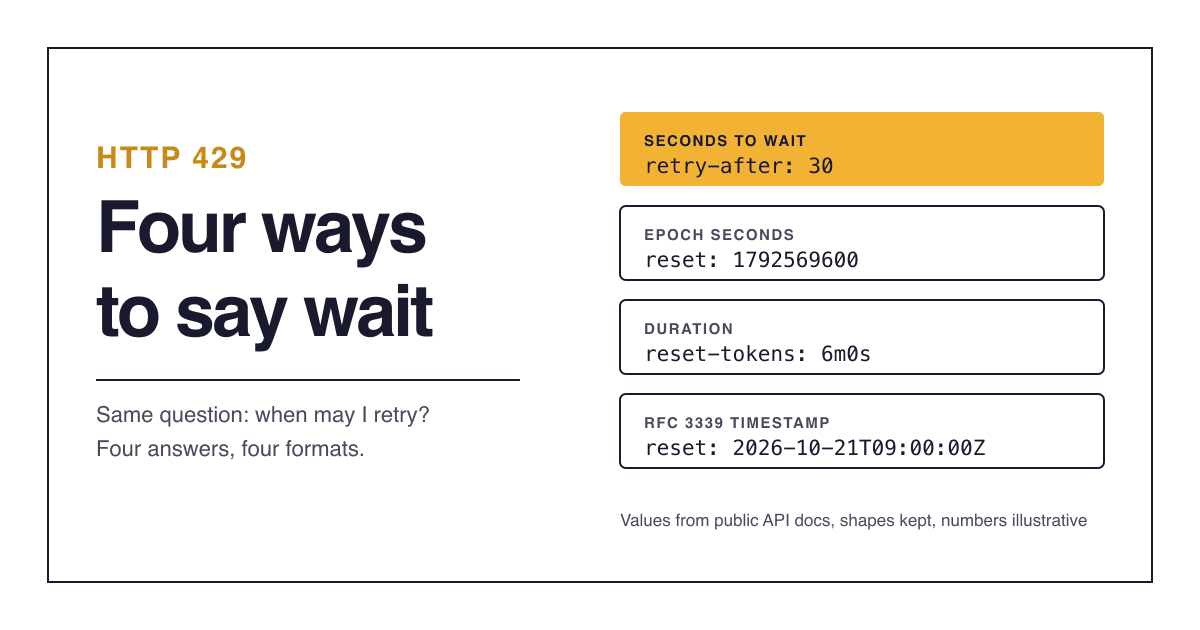
API Rate Limit Headers: What to Send With a 429, and How Clients Should Wait
A 429 Too Many Requests tells a client to slow down; Retry-After and the rate limit headers tell it for how long. What each header means, how GitHub, OpenAI, Anthropic and Discord write them, and a retry loop that honours Retry-After and backs off with jitter.
CodeTrendy Editorial Team
More Articles
6 total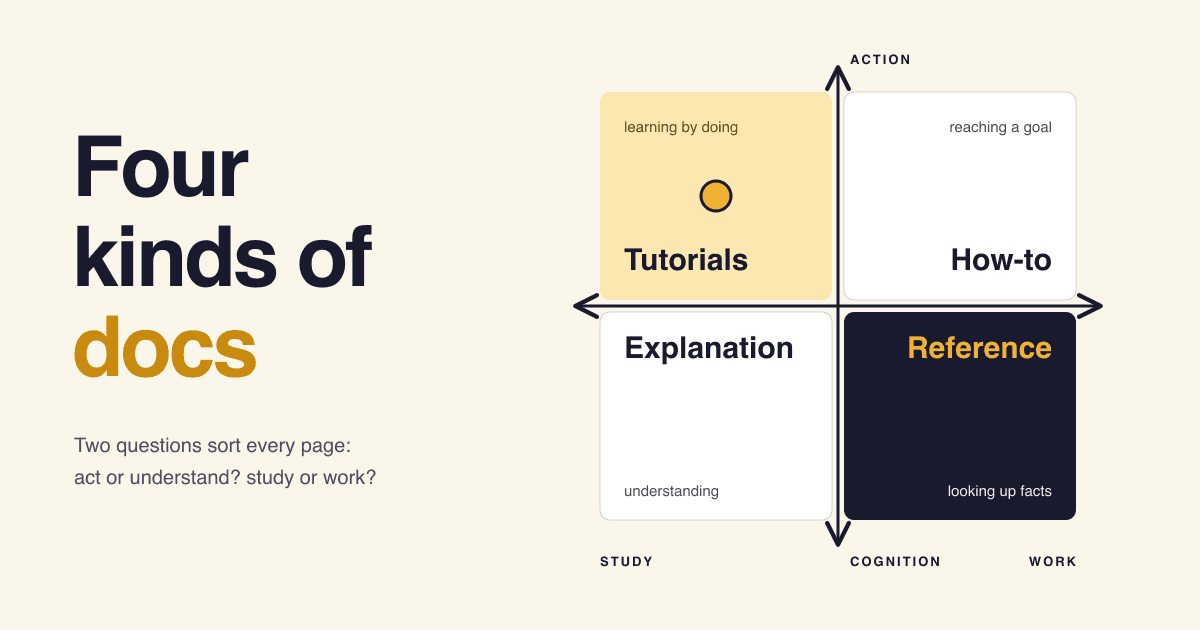
Diátaxis: How to Structure Developer Documentation in Four Kinds of Pages
The Diátaxis framework sorts every docs page with two questions about the reader: doing or understanding, learning or working. What goes in tutorials, how-to guides, reference and explanation, and how to fix the docs you already have.
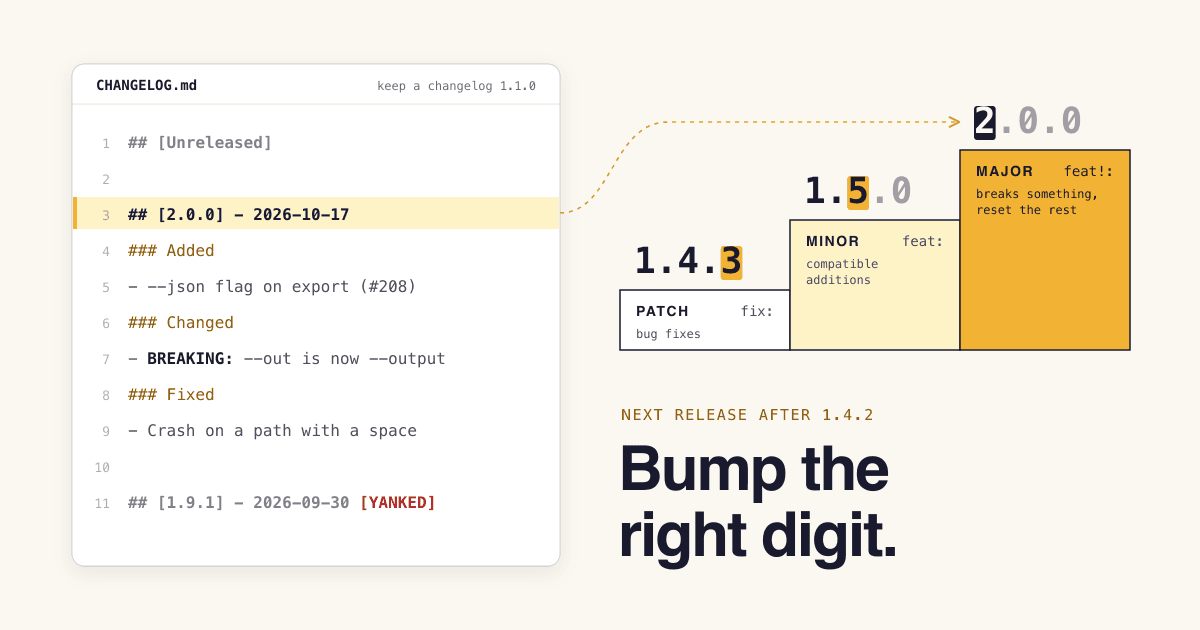
Changelogs People Read: Keep a Changelog, SemVer and Release Notes in Practice
What goes in a CHANGELOG.md, how to pick the next MAJOR.MINOR.PATCH number, why npm treats 0.x versions differently, and which tools can draft release notes for you.
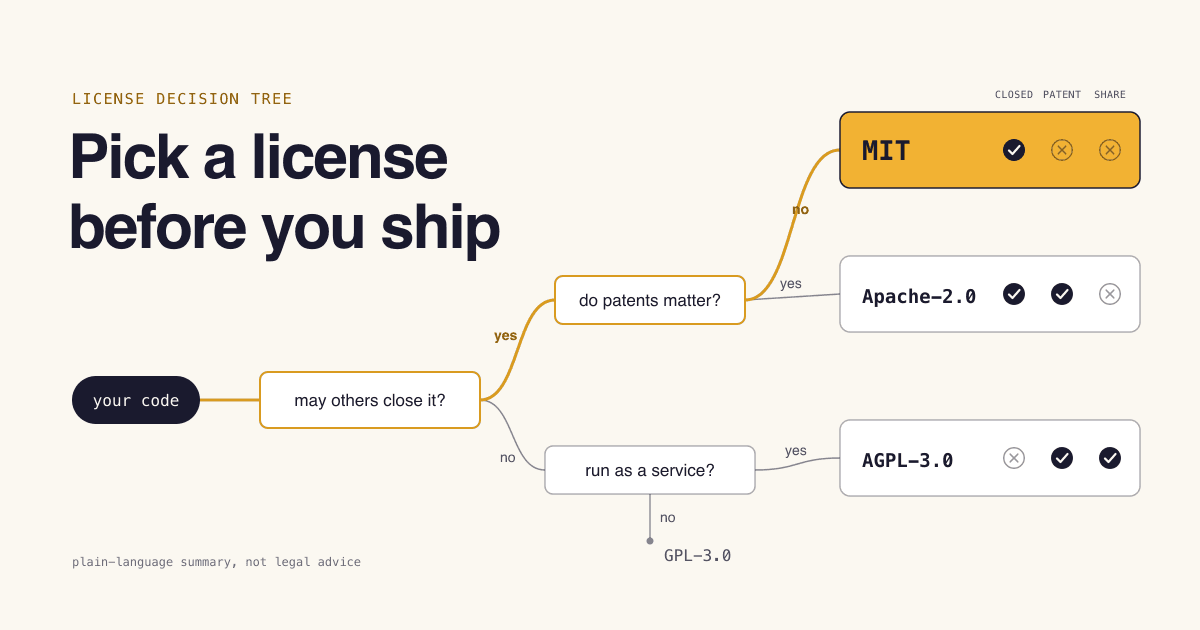
MIT, Apache 2.0 or AGPL? Picking an Open Source License Before You Ship
What MIT, Apache 2.0, MPL, GPL, AGPL and source-available licenses ask of the people who use your code, which one each package ecosystem defaults to, and why Elastic, HashiCorp and Redis changed theirs.
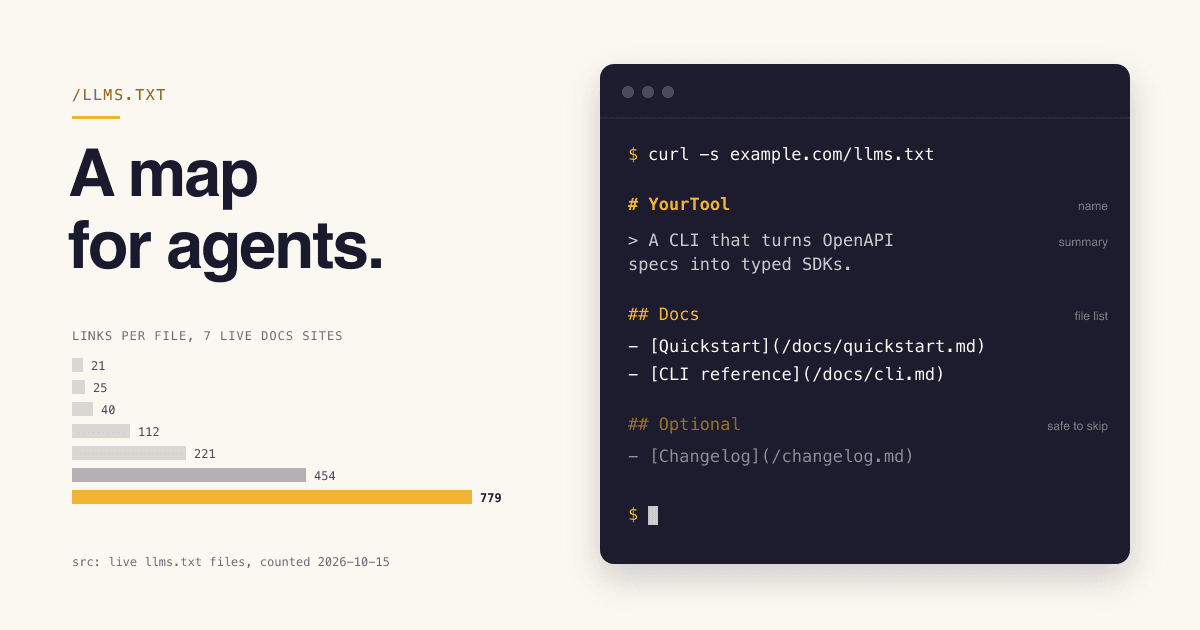
llms.txt for Developer Tools: What It Does, Who Reads It, How to Write One
An llms.txt file gives AI agents a short map of your docs. What goes in it, which tools actually read it, what it will not do for search, and how to write one for your developer tool.
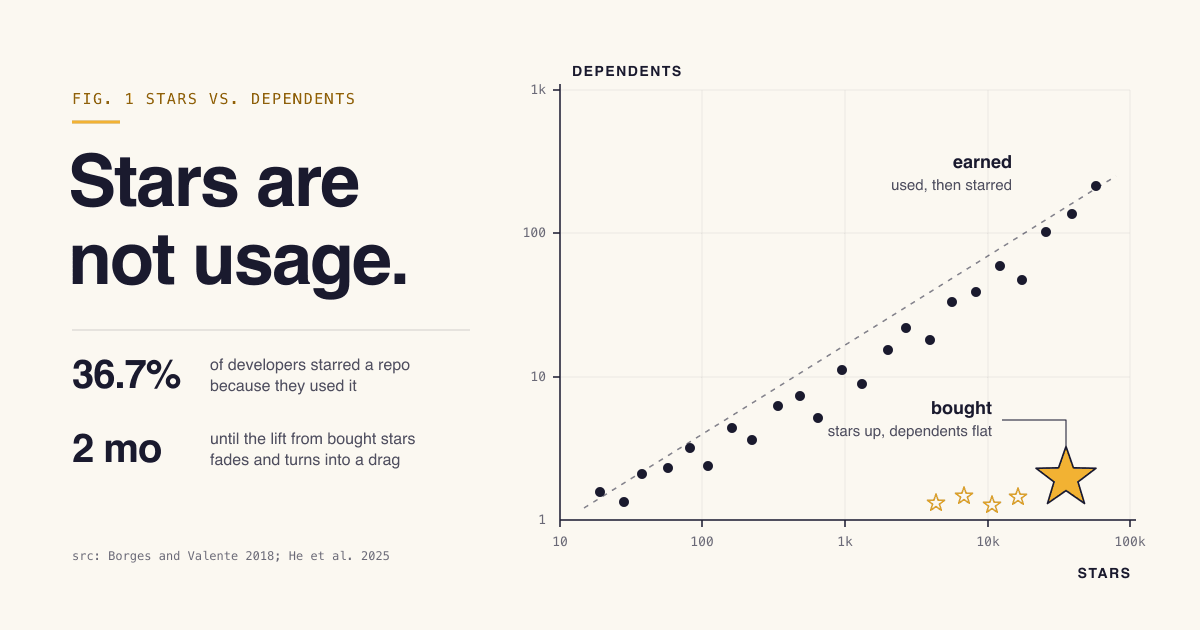
Are GitHub Stars Worth Chasing? What the Research Says
Most developers check the star count before they adopt a tool, but most stars are not usage. What a star measures, what bought stars do to a repository, and which signals show real adoption.